
Pidurangala Rock Sri Lanka: Hike, Fee & Best Time
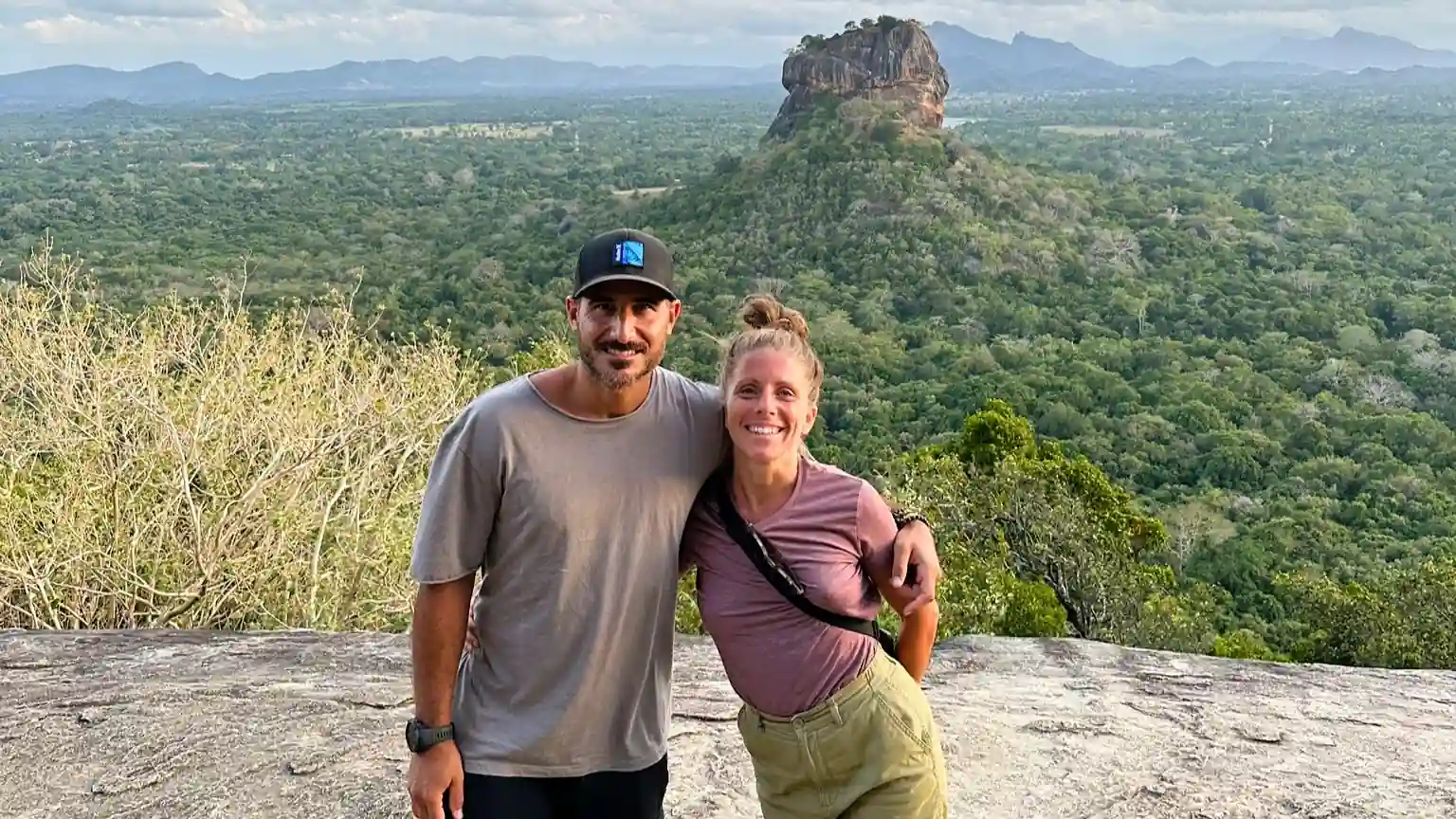
Pidurangala Rock is a major landmark in Sri Lanka’s Cultural Triangle. It sits just north of Sigiriya Rock Fortress. Today, most visitors come for the hike. From the summit, they look out over the jungle and see Sigiriya rising in the distance.
Pidurangala is not only a morning lookout. The rock’s Buddhist roots date back more than two thousand years. Over time, it became tied to King Kashyapa. He ruled during the 5th century and turned Sigiriya into his royal citadel.
Therefore, a trip to Pidurangala offers multiple experiences at once. You can explore ancient Buddhist history and discover monastery ruins. The hike includes a walk through the forest and a climb over uneven stones, culminating in a wide view of Sigiriya that many people rate among the best on the island.
The Ancient History of Pidurangala
The story of Pidurangala Rajamaha Viharaya reaches back long before the famous reign of King Kashyapa. Sri Lanka Tourism states that the caves were used as a Buddhist monastery as far back as the 1st and 2nd centuries BCE. Thus, Buddhist monks were already living there and practising meditation long before Sigiriya turned into a royal palace.
The caves at Pidurangala offered quiet spots that suited meditation and day-to-day monastic life. As time passed, devotees constructed additional religious buildings around the rock. In this way, Pidurangala grew into a working Buddhist monastery. Archaeological evidence at the site includes an old stupa, a chapter house, an image house, a bodhighara, a preaching hall, and other monastery structures. There are also caves with drip ledges.
The monastery is said to match a Panchavasa layout. This is a traditional plan that places key buildings needed for Buddhist monastic routines in a set arrangement. Therefore, Pidurangala should not be treated merely as the rock beside Sigiriya. The place mattered to religious life long before the political events of the 5th century brought wider attention to the area.
King Kashyapa and the Connection Between Sigiriya and Pidurangala
King Kashyapa I is usually linked with the best-known part of Pidurangala’s story. He ruled from 477 to 495 CE. According to older traditional accounts, Kashyapa took the crown after his father, King Dhatusena, was assassinated. His half-brother, Moggallana, is said to have had a better claim. Moggallana then fled, only to return later with troops.
Kashyapa feared what would happen next. He abandoned the old capital at Anuradhapura and set up his royal base at Sigiriya. That huge rock gave him a solid military advantage. He then shaped it into a royal palace, a fortress, and a planned city.
Long before Sigiriya became his home, monks were already using caves in that area. Traditional accounts of Pidurangala suggest that King Kashyapa relocated those monks from Sigiriya. He also backed the construction or expansion of a monastery at Pidurangala. The monastery linked to his support is thought to have been called Uppalavanna Kashyapa Giri Viharaya. Sri Lanka Tourism lists Pidurangala as a likely place for this key monastery.
As a result, Sigiriya and Pidurangala often appear together in historical records. Sigiriya became the base of royal power, while Pidurangala grew into a major Buddhist religious site. Kashyapa’s reign did not last forever. It ended in 495 CE. Moggallana returned with an army, and Kashyapa met him in battle. Following his army’s defeat, Kashyapa took his own life. Thereafter, Sigiriya returned to monastic use, while Pidurangala kept its religious role.
The Ancient Monastery and Reclining Buddha
Climbing Pidurangala involves exploring ancient remains that shape the entire experience. At the base, you enter through Pidurangala Rajamaha Viharaya, which is still used for Buddhist worship today. The bright white temple you see now dates from a later period. Even so, the nearby caves and older archaeological traces link the area to a far earlier Buddhist time.
As you move up the path, you reach a wide rock shelter. Inside rests an ancient reclining Buddha statue that measures about 46 feet in length. It was made mostly of brick and plaster. Over time, much of the plaster has worn away, revealing the ancient brickwork underneath.
Other ancient brick structures are visible around the cave. These features are thought to mark parts of the site that were set aside for monks, especially for meditation. You do not need to rush through this part just to get to the top. Take a few minutes to look closely at the ruins. They show that long ago, people came to Pidurangala for religious reasons, well before it drew attention from modern travellers.
How Pidurangala Got Its Name
People also talk about traditions tied to the origins of the name Pidurangala. One common explanation links it to terms used for gold offerings. Some experts point to rock inscriptions, noting that they contain syllables like “pidu” and “ran”. From this, many people conclude that the name might mean something like a stack or heap of gold given as an offering.
Another version of the story ties the name to King Kashyapa helping the monastery. According to this account, the renaming occurred when Buddhist monks were relocated from the Sigiriya area. However, these are best seen as folk tales rather than solid proof. The exact origins of the modern name Pidurangala are not as clearly established as the archaeological record that supports the monastery itself.
What to Expect on the Pidurangala Rock Hike
The Pidurangala Rock hike starts at the Buddhist temple at the foot of the rock. You begin with stone steps before moving onto a trail through the trees. Early on, the route feels manageable for most hikers who are reasonably fit. The canopy overhead also helps keep things cooler.
After about 15 to 20 minutes, you will come to the spot with the old reclining Buddha and the remains of the monastery. Once you pass that area, the trail becomes more challenging. The upper section features large boulders. You may need to climb up, press through narrow gaps, or balance over uneven rocks. A few sections will require the use of both hands.
Reaching the summit usually takes 30 to 60 minutes. Many people end up taking around 45 minutes, depending on crowd levels, your fitness, and the path conditions that day. The final stretch might not be suitable for visitors with severe mobility limitations. Still, for most people who can move around fairly well, it is a brief and fun climb.
Pidurangala Sunrise and the View of Sigiriya
The view from the top is among the most iconic in Sri Lanka. At Pidurangala, you can see Sigiriya Rock Fortress rising above the trees. The jungle stretches out below. You can also spot forests, water reservoirs, fields, and distant hills along the horizon. This is one key way in which climbing Sigiriya differs from climbing Pidurangala. When you are on Sigiriya, you are standing directly among the old palace ruins. From Pidurangala, however, you look over and see the entire Sigiriya Rock area.
Most people go to Pidurangala at sunrise. Visitors usually start the walk in the predawn hours and reach the top as the world brightens. For a sunrise trip, plan on about 45 minutes to 1 hour to get to the summit. Bring a reliable torch or a headlamp, as parts of the path are still dim. Sunset offers equally spectacular views. Just note that you will need to make your way down as the light starts to fade.
Pidurangala Entrance Fee and How Long to Spend
Pidurangala is accessed via the temple at the bottom, not through the Sigiriya site ticket system. Many 2026 visitor reports indicate that the entrance fee is around LKR 1,000 for foreign visitors. A few reports still mention LKR 500, which appears to be an older rate. Since there is no clear, up-to-date official price listed online by the temple, bring cash and check the current amount at the entrance.
Plan for about 1.5 to 2 hours for the full visit. That time covers the climb, a break at the top, and the walk back down. If you are going for sunrise or photos, set aside extra time on the summit.
Best Time to Visit Pidurangala Rock
Morning is usually the best time for Pidurangala. Later on, the heat near Sigiriya can feel intense. If you are taking photos, sunrise provides the well-known scene, with Sigiriya framed by the early morning light. Starting early also makes the climb feel less tiring.
Another option is late afternoon. Many people enjoy the warm light at this time, which makes the views even more spectacular. Climbing at midday is doable, though the top area is open and can get uncomfortably hot. When it rains, be extra careful. The rocks can turn slippery, especially near the last part where you scramble up.
Pidurangala Rock vs Sigiriya Rock
People often compare Pidurangala with Sigiriya, but the two places feel nothing alike. Sigiriya Rock Fortress ranks among Sri Lanka’s top archaeological sites. At the site, you can walk through ancient water gardens, view the frescoes, and admire the famous Mirror Wall. You will also encounter the iconic Lion’s Paw entrance. At the top, you can find the remains of King Kashyapa’s palace.
Pidurangala feels more like a hike. The climb is part of the experience. Along the way, you can also find Buddhist ruins. Near the top, panoramic views stretch out over the surrounding landscape. For these reasons, Pidurangala is not meant to be a substitute for Sigiriya. If you care about history, plan to visit both. Climb Pidurangala for the sight of Sigiriya, and then visit Sigiriya to learn more about what was inside the fortress. Taken together, these stops give a fuller picture of this part of Sri Lanka.
What to Bring and Important Safety Tips
- Sturdy shoes: A good grip is essential, as the final section involves scrambling over rocks. Avoid flip-flops and any slippery sandals.
- Drinking water: Bring enough for the climb, especially if you start after sunrise.
- Sun protection: Pack sunscreen, sunglasses, and a hat, as the summit offers almost no shade.
- Headlamp/Torch: If you plan to reach the summit at sunrise, carry a headlamp or a reliable torch.
- Dress respectfully: Since the path starts inside an active Buddhist temple, dress respectfully as you pass through the religious grounds. Keep your shoulders and knees covered. If asked to remove your shoes, do so, and simply put them back on once you exit the temple area.
- Safety first: Be extra careful around the edge of the summit, as some sections are open and there are no safety rails.
Is Pidurangala Rock Worth Visiting?
Pidurangala Rock is a good stop, especially if you like history, walking trails, taking photos, and wide views. It feels different from a visit to Sigiriya alone. While you climb, you move through parts of an old Buddhist monastery, which existed before King Kashyapa built his palace. Along the path, the ruins show a past that reaches back over two thousand years.
Later, the tale of King Kashyapa ties Pidurangala to the building of Sigiriya. At the same time, the monastery site and the reclining Buddha still point to its role in Buddhist worship. Today, the rock continues to offer visitors an enjoyable short hike. If you want a full-day plan, start by climbing Pidurangala for sunrise. Afterwards, descend and explore the monastery remains you passed along the way. Finish by visiting Sigiriya Rock Fortress on a separate visit, so you can experience the rest of the story.