
Minneriya National Park Safari: Price & Best Time
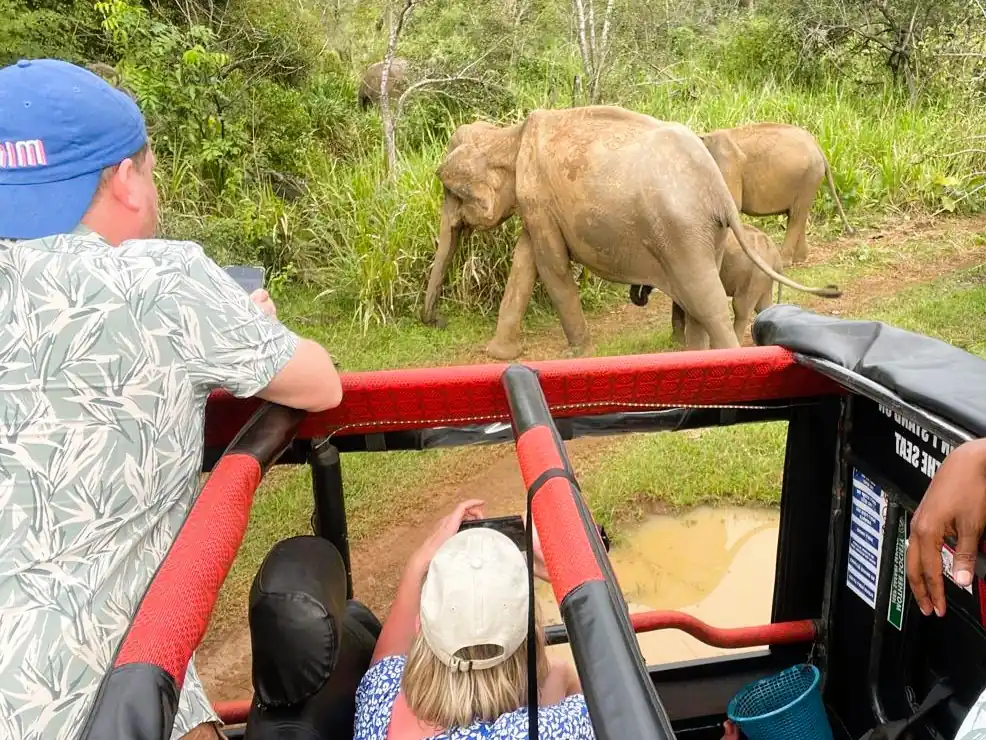
A Minneriya National Park safari is one of the best-known wildlife experiences in Sri Lanka. Many visitors come for a chance to spot wild Asian elephants in their natural habitat.
The park sits in Sri Lanka’s North Central Province, close to Sigiriya, Habarana, Dambulla, and Polonnaruwa, making it a perfect addition to a Cultural Triangle route.
Minneriya is also famous for the seasonal Elephant Gathering. During the dry months, elephants move towards the old Minneriya Reservoir, where you can watch family groups grazing on fresh grass and calves staying close to their mothers. Elephants often gather at the reservoir to drink and bathe.
However, Minneriya is not solely about elephants. The park’s forests, open grasslands, and wetlands support a wide range of mammals, reptiles, and birds. This diverse ecosystem makes it an ideal destination for wildlife enthusiasts and photographers.
About Minneriya National Park
Minneriya was initially a wildlife sanctuary before its declaration as an official national park in 1997. A key reason for protection was to safeguard the catchment around the old Minneriya Reservoir and preserve a crucial habitat for Sri Lankan elephants.
Inside the park, the landscape consists of dry mixed evergreen forests, scrublands, open grasslands, and riverine wetlands. At the heart of this ecosystem lies the Minneriya Tank.
The reservoir not only supplies water for the wildlife but also supports the nearby farming communities. The unique blend of forest and open grassland makes it an excellent location for wildlife watching from a safari jeep.
The History of Minneriya Tank
The Minneriya Tank is not a natural lake but an ancient man-made reservoir built in the third century CE under King Mahasen. Historically, Sri Lanka’s rulers planned irrigation systems exceptionally well.
They built advanced networks to hold rainwater, ensuring agricultural success during the dry months. The Minneriya Reservoir was a vital part of this wider plan and continues to shape the region today.
As water levels drop during the dry season, fresh grass emerges along the banks, drawing elephants from nearby forests to graze. This natural phenomenon is the primary reason behind the famous Minneriya Gathering.
The Famous Minneriya Elephant Gathering
The Elephant Gathering in Minneriya National Park is widely regarded as one of Sri Lanka’s standout wildlife events. In the dry months, smaller family groups of elephants head towards the reservoir in search of food and water.
As more elephants arrive from nearby areas, visitors can witness large herds grazing across the open plains. Sri Lanka Tourism highlights the period from roughly May to October as the peak season for this event. During these dry months, the chance of seeing larger herds is usually higher.
When the rains begin, the herds disperse, moving into nearby forests and other protected lands. Since these are entirely wild elephants, no guide or operator can guarantee a specific number of sightings. Elephant movements depend heavily on rain patterns, reservoir water levels, food availability, and other local conditions.
Wildlife in Minneriya National Park
While Minneriya is renowned for its elephants, there are many other animals you can see in Minneriya National Park, including sambar, spotted deer, mouse deer, wild boar, toque macaques and grey langurs.
Smaller mammals like mongooses, porcupines, and the endangered Indian pangolin also inhabit the area. Sri Lankan leopards and sloth bears are known to roam the region as well. However, sightings are rare, so consider them an unexpected bonus rather than a guaranteed part of your safari.
The reservoir attracts many waterbirds, while several other birds found in Minneriya National Park can be spotted around the forests, grasslands and wetlands. You may also have a chance to see crocodiles in Minneriya National Park, along with monitor lizards, snakes and other reptiles.
What to Expect on a Minneriya Jeep Safari
A Minneriya jeep safari is usually conducted in a specialised 4×4 vehicle. These vehicles often feature open sides or elevated seating for optimal viewing.
Once inside the park, the route passes through patches of forest and scrub before opening up to the wider grassy plains near the reservoir. Your driver will look for fresh tracks and signs of elephant movement, frequently stopping for other animal and bird sightings.
A Minneriya National Park safari usually lasts three to four hours, although the exact duration may vary depending on wildlife sightings and trail conditions.
Travellers who prefer cooler temperatures and a quieter start to the day can choose a Minneriya morning safari, which usually begins around sunrise. If you are unsure whether the early start suits your trip, you can read more about whether a morning safari is worth doing in Minneriya.
Travellers who prefer later wildlife viewing can choose a Minneriya evening safari, when temperatures begin to cool, and elephants may move towards the open grasslands. These later drives are particularly popular during the Elephant Gathering season.
Best Time for a Minneriya National Park Safari
The dry season is generally the best time to see large herds of elephants at Minneriya. As a result, most travellers plan their trips in July, August, and September.
Sri Lanka Tourism also notes that the larger Gathering season can run from May to October. You can also learn more about afternoon safari wildlife viewing in Minneriya before deciding which safari time suits your itinerary. The herds tend to be more active around the reservoir during this time, and the softer evening light is perfect for photography.
Morning safaris, on the other hand, offer a calmer atmosphere suited for birdwatchers and those who prefer a quieter outing. Although the park can be visited outside the main Gathering months, the chance to see wild elephants in Minneriya throughout the year can change as herds move between Minneriya, Kaudulla and nearby forest areas.
Minneriya vs Kaudulla National Park and Hurulu Eco Park
When planning an elephant safari near Sigiriya, keep one key point in mind: wild elephants do not stay in one place. Minneriya and Kaudulla are linked within a wider elephant region.
This means elephants frequently shift between zones when water and grass availability changes. At other times, elephants may also head towards the Hurulu forest area.
Therefore, instead of insisting on Minneriya simply because of its fame, rely on a knowledgeable local guide to recommend Minneriya, Kaudulla, or Hurulu based on recent sightings and current travel conditions. Ultimately, this approach usually leads to a more satisfying wildlife trip than choosing one park months in advance and ignoring how elephants move around.
Minneriya National Park Safari Price
A Minneriya safari usually involves both the park entrance fee and jeep cost, although some operators quote these separately and others combine them into one package price.
For travel in 2026, the foreign adult entrance ticket (conservation fee) is approximately USD 15 (roughly LKR 4,500), but visitors should expect additional costs such as taxes, vehicle fees, and tracker fees.
The total Minneriya jeep safari cost can vary depending on group size, jeep type, pickup location and package inclusions, so confirm the full price before booking.
Before booking, check what is included in a Minneriya safari price, such as park entrance tickets, taxes, jeep hire, driver fees, hotel pickup, bottled water and any guide support. Sri Lanka has introduced an online entry permit system for key national parks, including Minneriya, to streamline entry and reduce crowding at the gates.
Responsible Elephant Watching and Safety
A responsible safari ensures elephants have enough space to behave naturally. Never encourage your driver to chase the elephants, crowd the herds, or approach mothers with calves.
Always keep the safari vehicle on approved tracks and never block an elephant’s path. This is especially important in the Minneriya–Kaudulla–Hurulu safari area, where overcrowding of jeeps and vehicles getting excessively close to the animals has become a growing concern.
A 2025 Sri Lanka Tourism Development Authority (SLTDA) visitor-management report highlights that poor driving around wildlife not only unsettles the elephants but also damages their natural habitat. Remain in the vehicle unless instructed otherwise by your guide.
Refrain from feeding any animals and try to keep your voice down to minimise noise. For a comfortable trip, wear light clothing, apply sunscreen, and bring a hat and sunglasses. Remember to pack drinking water, binoculars for birdwatching, and a zoom lens for photography. Avoid asking your driver to approach the wildlife unnecessarily.
Combining Minneriya Safari with Sigiriya
Minneriya serves as an ideal excursion for anyone staying in Sigiriya or Habarana.
It is easy to visit Sigiriya and Minneriya National Park on the same day by climbing Sigiriya Rock early in the morning, returning to your hotel for a break, and taking a Minneriya safari later in the day.
If time permits, you can combine your safari with a hike up Pidurangala Rock. You can also include the Sigiriya Village Tour, Dambulla Cave Temple, or Polonnaruwa Ancient City. This unique combination of ancient history, traditional village life, and thrilling wildlife encounters makes the entire Sigiriya region truly special.
Is Minneriya National Park Safari Worth It?
When deciding if a Minneriya safari is worth it, consider the unique opportunity it provides to witness the largest gathering of Asian elephants in the world.
For wildlife enthusiasts and photographers, observing these herds behave naturally in their own environment is an unparalleled experience that easily justifies the cost and time.