
Dambulla Cave Temple: History, Fee & Travel Guide
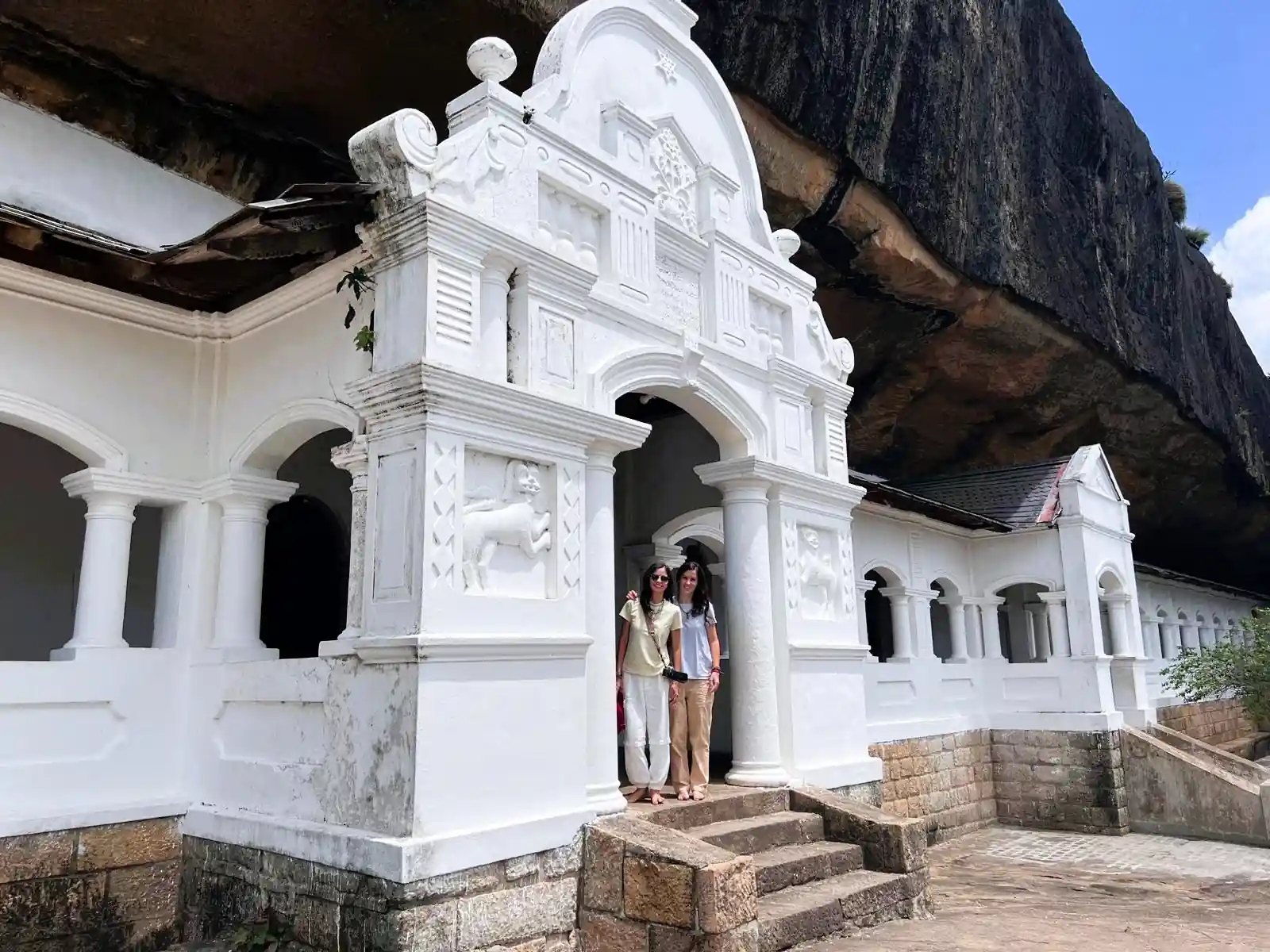
The Dambulla Cave Temple, also known as the Rangiri Dambulla Cave Temple, is one of the key Buddhist sites in Sri Lanka. It sits under a large rock face that rises roughly 150 to 180 metres above the lowlands. Inside, visitors can find five main cave shrines. Each shrine holds many works of art, including statues, stupas, and mural paintings. UNESCO notes that it is the largest and best-preserved cave temple in the country. There are 157 statues there, along with about 2,100 square metres of Buddhist mural art. People have visited this place as a pilgrimage site for over 22 centuries. In 1991, it was added to the UNESCO World Heritage List.
The Earliest History of Dambulla
Dambulla’s history starts well before the time of kings. Excavations on the rock have unearthed very ancient stone tools. The wider area also holds early settlements and megalithic graves. Not far away, at Ibbankatuwa, around two kilometres from Dambulla, there is one of the most famous megalithic burial grounds in Sri Lanka.
By the 3rd century BCE, Buddhist monks who lived in the forest began to use natural rock shelters near Dambulla. They stayed there and practised meditation. UNESCO notes close to 90 rock shelters and 37 donor inscriptions. These finds are dated from the 3rd century BCE up to the 2nd century CE. Many shelters have drip ledges carved to stop rainwater from running in. Later, by about the 1st century BCE, the top caves were changed into shrines.
King Valagamba and Dambulla
The best-known traditional account ties Dambulla to King Vattagamani Abhaya, also called King Valagamba. Sri Lankan chronicles say he lost Anuradhapura in the 1st century BCE. They also say he lived in exile for years. Local monks near Dambulla are often said to have given him shelter. After he took the throne again, tradition credits him with expanding the caves into a temple site in gratitude.
Near the shrine area, an early Brahmi inscription mentions a ruler named “Gamini Tisa”. Many scholars treat this as a possible nod to Vattagamani Abhaya. The match has support from the text of the inscription. Still, the full tale of refuge shows up more clearly in later retellings.
Royal Patronage Through the Centuries
From the 5th to the 13th centuries, workers enlarged the caves. Brick screen walls were added. Shrine rooms became more structured and formal. At the base of the rock, excavations found a stupa, a Bodhi-tree shrine, and a chapter house. The construction work seems to have occurred in two main phases, first in the 5th to 6th centuries, and then again in the 9th to 10th centuries.
In the 11th century, King Vijayabahu I backed renovation work. In the 12th century, King Nissankamalla did further refurbishment. He also ordered new sculptures. He is linked with gilding that covered 73 Buddha images. Rock inscriptions name the shrine Svarnagiri-guha. The name means “Golden Rock Cave”. This helps explain why the site later became known as the “Golden Temple”.
After that, several rulers contributed as well, including Bhuvanekabahu V, Rajasimha I, Vimaladharmasuriya I and II, Senarat, and Narendrasimha. Much later, during the reign of King Kirti Sri Rajasimha, from 1747 to 1782, Dambulla saw a strong Buddhist and art revival. Cave 3 was turned into the Maha Alut Viharaya. The other shrines were extensively repainted in the Kandyan style that people can see today.
The Five Cave Shrines
- Cave 1: Devaraja Lena, also called the Cave of the Divine King, is known for a reclining Buddha cut into the natural rock. The figure is about 14 to 15 metres in length. The cave also contains early inscription traces that link back to Dambulla.
- Cave 2: Maharaja Lena, or the Cave of the Great Kings, stands out as the biggest and most striking shrine. Many Buddha images are found here. You can also see works tied to King Valagamba and King Nissankamalla. Other figures appear too, such as Vishnu and Saman. Paintings cover the walls and ceiling. In addition, water from a crack in the rock drips down into the space. People have treated that water as holy for a long time.
- Cave 3: Maha Alut Viharaya, meaning the Great New Temple, is closely linked with Kirti Sri Rajasimha and his restoration work in the 18th century. The cave is noted for Kandyan-period murals and for Buddha statues.
- Cave 4: Paccima Viharaya, the Western Temple, has Buddha images, murals, and a stupa.
- Cave 5: Devana Alut Viharaya, the Second New Temple, came later, likely in the 19th century. It was largely renovated and then repainted in 1915.
Paintings, Later Changes and Conservation
UNESCO lists 157 statues and about 2,100 square metres of mural art. These works were made, repaired, and repainted across multiple periods. Even so, older Buddhist ideas were preserved in many places.
In 1815, after the Kandyan kingdom ended, Dambulla stopped getting support from the royal court. Still, monks, local patrons, and families of skilled craft workers carried on looking after the shrines. Major repainting work started again in 1915. The veranda fronts were rebuilt in the 1930s. This is one reason the site matters as a temple that is still used today.
UNESCO added the site to the World Heritage List in 1991. At that time, it was called the Golden Temple of Dambulla. In 2019, UNESCO accepted the official name Rangiri Dambulla Cave Temple. Conservation work now focuses on murals and painted figures, with damage caused by damp, strain from visitors, religious routines, and the wider cultural setting around the temple.
Entrance Fee, Opening Hours and Best Time
- As of March 2026, a local travel listing says an adult foreigner ticket is about LKR 3,000. The museum payment is listed separately.
- Since prices set by the temple can change, double-check the current cost. Ask at the ticket desk near the modern Golden Temple before you start your climb.
- Most travel guides list opening hours as roughly 7:00 AM to 7:00 PM.
- Many people prefer early morning. It is cooler, and the area is calmer. Late afternoon can work well too, and the heat feels less harsh.
- Plan for about 1.5 to 2 hours for the visit. Sri Lanka Tourism also suggests going in the morning or later in the day, not at the hottest time.
- The big modern Golden Buddha you see from the road is part of the lower temple area. The older UNESCO cave shrines are higher up the rock. You reach them by stone steps.
Dress Code and Visiting Tips
- Dambulla is a Buddhist temple that is still in use. Therefore, ensure your shoulders and knees are covered.
- Take your shoes off before you go into the sacred cave area. Try not to use a camera flash. Do not touch the murals or the statues at all.
- Wear shoes that feel comfortable, since you will climb. The rock can get scorching around midday.
- Monkeys are often seen on the route, so keep snacks and any loose items in your bag.
Is Dambulla Cave Temple Worth Visiting?
Yes. The Dambulla Cave Temple is often listed as a top stop in Sri Lanka, particularly if you are working through the Cultural Triangle. People come for the old history and the spiritual role it has played for centuries. They also come for the wall paintings, which have been maintained in striking condition. There are 157 statues inside, and seeing that many in one place can feel surprising.
Climb up to the rock top, and you get views over the nearby plains. That open scenery gives the whole visit a calm setting. If you like history, you will find plenty to see. If you care about art, the murals hold your attention. Even if you just want quiet and a sense of wonder, this UNESCO World Heritage site delivers an honest look at Sri Lanka’s heritage.