
Hurulu Eco Park Safari – Complete Guide, Price & Best Time
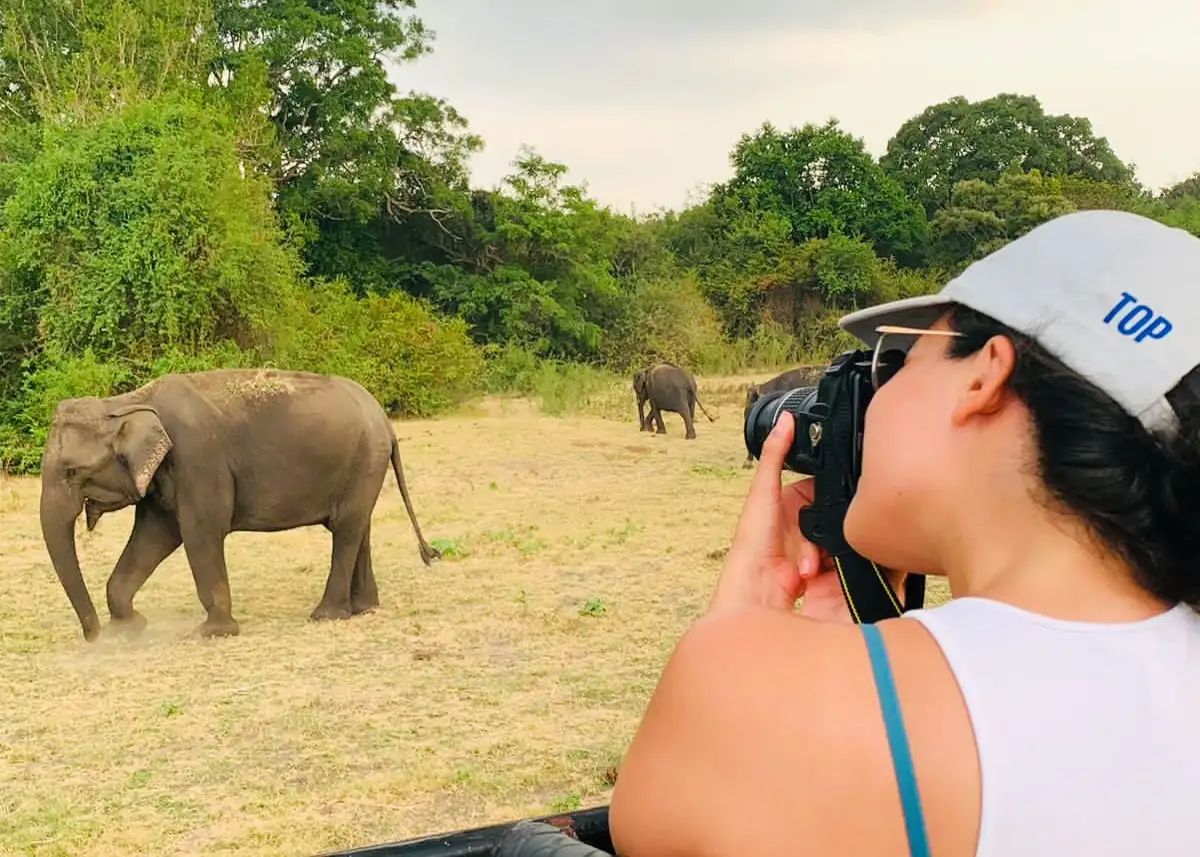
The Hurulu Eco Park safari is a premier wildlife excursion for people staying around Habarana and Sigiriya. Many visitors come to observe wild Sri Lankan elephants in their natural habitat, rather than in a staged setting. Hurulu sits in Sri Lanka’s North Central Province. It is part of the same elephant belt that links Minneriya and Kaudulla National Parks. When the weather turns and elephants drift away from those well-known parks, Hurulu becomes a more valuable option. That is when the animals look for food, water, and safer patches of forest.
Minneriya is known for large elephant herds near open grasslands by the reservoir. Hurulu feels different. The safari here is often more forest-focused. Visitors may spot elephants moving through dry-zone forest and scrub. Some sightings happen near open grasslands too. Guests usually see smaller family groups, although larger herds can appear sometimes.
Hurulu is also convenient for travel planning. It is close to Habarana, so travellers can add other stops effortlessly. Many tourists pair it with a visit to Sigiriya Rock Fortress. Other itineraries often include Pidurangala, Dambulla, or a Sigiriya Village Tour.
About Hurulu Eco Park
Hurulu Eco Park is within the Hurulu Forest Reserve. This reserve is a key dry-zone forest area in Sri Lanka. UNESCO has recognised the larger reserve as a Biosphere Reserve. It covers about 25,500 hectares of tropical dry evergreen forest.
Established in 2006, Hurulu Eco Park was designed to support wildlife tourism while also aiding conservation work. Inside the park, visitors can find dry evergreen forest, scrub, and grasslands. There are also seasonal waterholes. These features help elephants and other wildlife survive and move around.
The park is also used as a seasonal space for elephant travel. It connects to the broader Minneriya–Kaudulla–Hurulu landscape.
Elephant Migration at Hurulu Eco Park
Before booking a Hurulu Eco Park elephant safari, it helps to know one key point. Wild elephants do not stay in just one place permanently.
They travel around the broader area. They follow rain patterns, find water where it is available, and seek out fresh grass and leaves. As a result, Minneriya, Kaudulla, and Hurulu become important at different times of the year.
As a rule of thumb, Minneriya tends to be most active from about July to October. After that, many elephants shift towards Kaudulla from roughly September to December. Hurulu often becomes more important from around November until June, since herds use its forest cover and grazing zones.
However, treat these dates as a rough guide only. Each year can bring different rainfall and different water levels. Therefore, elephant movements can start sooner or later than expected.
For a better trip, speak with a skilled local safari guide. Ask where elephants were spotted in the past few days. Make your choice based on recent sightings rather than just the park name.
Wildlife You Can See at Hurulu Eco Park
Hurulu is known for Sri Lankan elephants. Guests can sometimes spot females with young calves, small family groups, or a single adult male travelling through the trees or foraging in open patches.
Observers may also notice other animals. Grey langurs are common, along with purple-faced leaf monkeys. Spotted deer and wild boar can appear too, plus smaller mammals that stay close to cover.
Leopards and sloth bears live in the broader forest area. However, visitors should not plan their day around them. If one is spotted, it is a welcome surprise.
Birdlife is another strong point here. During the drive, peacocks, parrots, raptors, and many other dry-zone species may be spotted, with early morning trips often giving better chances. As with any authentic wildlife experience, specific sightings cannot be guaranteed.
What to Expect on a Hurulu Eco Park Safari
A Hurulu Eco Park safari is usually conducted in a 4×4 vehicle. The vehicle travels on dirt roads through forest, scrub, and open clearings. The driver looks for signs of fresh elephant activity as well as other wildlife. Since elephants are often spotted near trees, the outing can feel quite different from Minneriya.
Morning or late afternoon trips typically last around 2.5 to 3 hours. Some operators also offer longer half-day options. Morning safaris often start around 7:00 am. Afternoon trips usually begin sometime between 1:00 pm and 2:30 pm. This depends on the operator and the pickup location.
Best Time for Hurulu Eco Park Safari
Elephant viewing at Hurulu Eco Park is usually best from November to June.
In January, February, March, and surrounding months, the park can be a strong choice for people based in Sigiriya or Habarana. During this time, Hurulu sometimes offers better chances to spot elephants than Minneriya.
For many visitors, the late afternoon is a preferred choice. The heat starts to ease, and elephants may move around more in open feeding areas. The light in the afternoon also helps with photos.
Morning drives feel cooler and work exceptionally well for birdwatchers. A few safari guides also report spotting larger elephant groups more often on afternoon trips.
Hurulu Eco Park Safari Price
The safari cost for Hurulu Eco Park varies based on the number of people, the type of vehicle used, the tour duration, entrance fees, and the pickup point.
There is no single exact price that fits every booking. Some companies charge separately for entry tickets and the vehicle, while others bundle everything into one comprehensive package.
In many current offers, the entry fee for foreign adults typically ranges from USD 10 to USD 20. This is usually before any extra vehicle fees, tax items, or service charges.
Package deals are also available. These comprehensive options are typically around USD 65, depending on the group size and the operator. They can cover a private safari vehicle, a driver, the Hurulu entrance ticket, park fees, government tax, plus pickup and drop-off from certain areas near Habarana or Sigiriya.
Before paying, travellers should confirm the final total and check if the quote includes the entrance ticket, taxes, vehicle rental, safari driver, hotel transfer, and any guide services.
Hurulu vs Minneriya vs Kaudulla
Choose between Hurulu Eco Park, Minneriya, and Kaudulla based on where the elephants are currently located.
Minneriya is widely known for the Elephant Gathering. It is best visited from about July to October. When the situation shifts, elephants often head towards Kaudulla. That makes Kaudulla a good bet from roughly September to December. Hurulu matters more from around November to June. It can be the better choice during those months.
For instance, visitors travelling to Sigiriya in February should not pick Minneriya simply because it is the best-known park. At that time, Hurulu might show better elephant sightings. If travelling during the peak of the Minneriya Gathering season, Minneriya may be the better option.
It is best to base decisions on current wildlife movements rather than a rigid itinerary.
Responsible Elephant Watching and Safety
Wild elephants need enough space to behave as they normally do. A responsible safari driver will not chase after elephants, will not close in around a group, and will not stop in a way that blocks an animal from moving. Extra attention matters most when there is a mother with a young calf, or when a lone adult male is nearby.
Guests should stay in the safari vehicle unless park staff instruct otherwise. Within the park, visitors must not walk around, feed the animals, leave litter, or fly drones. For photos, use a zoom lens. Do not ask the driver to move too near the animals. Bring light clothing, sunscreen, sunglasses, a hat, and drinking water. Binoculars are helpful for spotting birds and other wildlife farther back in the forest.
Combining Hurulu Safari with Sigiriya
Hurulu Eco Park is an ideal stop for those staying in Habarana or Sigiriya. One convenient plan is to climb Sigiriya Rock Fortress early in the morning. Then return to the hotel for breakfast and a short rest. In the afternoon, embark on a Hurulu safari.
For a different experience, visitors can try Pidurangala at sunrise. After that, join a Sigiriya Village Tour later in the morning. Conclude the day with an elephant safari.
Travellers can also include Dambulla Cave Temple and Polonnaruwa as part of a longer Cultural Triangle itinerary. All in all, the Sigiriya and Habarana area is an excellent base for experiencing Sri Lankan archaeology, rural life, and wildlife, with less back and forth between activities.
Is Hurulu Eco Park Safari Worth It?
The Hurulu Eco Park Safari is highly recommended, mainly during seasons when elephants are less common around Minneriya and Kaudulla.
A major advantage is that it lies on the seasonal elephant route. Instead of thinking of elephants as tied to just one park, Hurulu shows how herds shift across a wider area.
The scenery also differs significantly from that of Minneriya. Minneriya often has wide, open reservoir grasslands. In Hurulu, visitors may spot elephants pushing out of dense foliage, feeding along forest paths, or moving quietly in small family groups.
It is advisable to plan the trip by checking the latest elephant sightings. Then decide where to go based on current wildlife movements. That can mean Hurulu, Minneriya, or Kaudulla.
When the timing is right, Hurulu Eco Park can deliver an exceptional wild elephant safari near Sigiriya and Habarana. It also fits well into Sri Lanka’s Cultural Triangle itinerary.